Living Between Two Worlds: The Immigrant's Balancing Act
⚠️ Disclaimer: This article discusses cultural values and personal finance from the author's perspective and community experiences. It does not constitute professional advice on family relationships, cultural practices, or financial decisions. Every family and situation is unique. The author and Duti.co are not responsible for any actions taken based on this information.
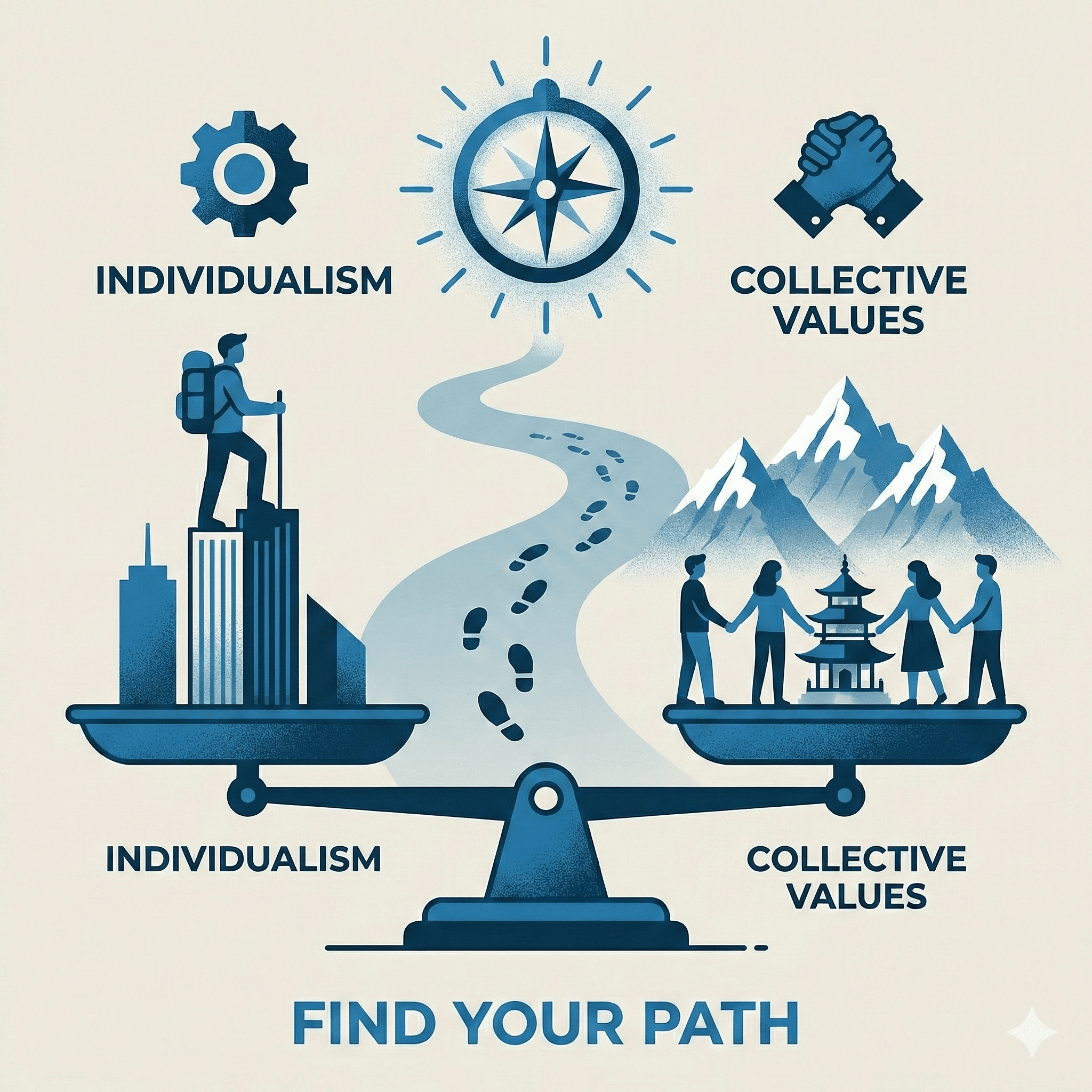
"You've become too American." "You don't care about family anymore." These words cut deep when you're working 60 hours a week, sending money home monthly, and still feel guilty for wanting to save for your own retirement. You're caught between two value systems: America's focus on individual achievement and your culture's emphasis on collective responsibility. This isn't about choosing one over the other – it's about creating sustainable balance.
🌏 Understanding the Cultural Clash
Two Different Worldviews
🏔️ Himalayan Collective Values
- • Family comes first, always
- • Success means lifting everyone up
- • Elder care is children's duty
- • Community reputation matters
- • Wealth should be shared
- • Individual needs secondary
🇺🇸 American Individualist Values
- • Personal responsibility
- • Success = individual achievement
- • Adults support themselves
- • Privacy valued over community input
- • Wealth building for self/nuclear family
- • Individual autonomy primary
💔 Common Conflicts (and You're Not Alone)
Real Scenarios Himalayan Immigrants Face
💰 Scenario 1: The Cousin's Wedding
🏠 Scenario 2: The Multigenerational Home
💼 Scenario 3: Career vs. Family Obligations
🌟 Real Story: Finding Balance
Tenzin's Journey: From Guilt to Clarity
- 1. Nuclear family needs (her kids' essentials, education)
- 2. Financial security (emergency fund, retirement)
- 3. Parents' basic support ($300/month regular + medical emergencies)
- 4. Extended family major events (weddings/funerals only, $200-500)
- 5. Optional (everything else – if budget allows)
🎯 Creating Your Personal Framework
The Three-Circle Model
Priority Circles: A Visual Guide
- • Your nuclear family's basics
- • Housing, food, healthcare
- • Emergency fund
- • Minimum retirement savings
- • Parents' basic support
- • Medical emergencies (family)
- • Kids' education savings
- • Major life events (births, deaths)
- • Extended family celebrations
- • Community obligations
- • Wants vs. needs
- • Social expectations
💬 Having "The Conversation" with Family
Script for Setting Boundaries
Sample Conversation Framework
🌱 Raising Kids with Both Value Systems
🌟 Keeping Himalayan Values Alive
- Community connection:
Regular temple visits, cultural events, language classes - Generosity mindset:
Involve kids in family support decisions, explain why we help - Elder respect:
Teach proper greetings, deference, care for grandparents - Collective identity:
"We're part of something bigger than ourselves"
💪 Teaching American Values
- Financial independence:
Kids save allowance, work part-time, learn budgeting - Personal boundaries:
"It's okay to say no." "Your body, your choice." - Individual achievement:
Celebrate their unique talents, not just family pride - Critical thinking:
"Question authority. Think for yourself."
🎯 Practical Boundary-Setting Strategies
💚 Finding Peace in the Middle
You don't have to choose between being a "good Himalayan" or a "good American." You can honor both by creating intentional systems.
The Hybrid Path:
🕉️ Honor collective values through regular, sustainable support
🕉️ Embrace individual boundaries to protect your family's stability
🕉️ Teach both to your children so they have tools for balance
🕉️ Forgive yourself for not meeting every expectation
🕉️ Educate family about American financial realities
🎯 Your Action Plan
This Month: Create Your Framework
- ☐ Week 1: Map your current support (write down every family contribution last year)
- ☐ Week 2: Calculate what's sustainable (10-15% of income maximum)
- ☐ Week 3: Define your three circles (what's non-negotiable vs. optional)
- ☐ Week 4: Have one boundary conversation with family
How do you balance cultural expectations with financial reality? Share your strategies in the comments – your experience could help others!
Related Reading
Explore more articles that complement this topic:
- Sending Money Home Smarter — Navigate the cultural expectations of supporting family while building your own future.
- What is a ROSCA? — Learn how traditional community savings circles work in modern America.
- Supporting Aging Parents Across Two Countries — Practical strategies for honoring family obligations across borders.