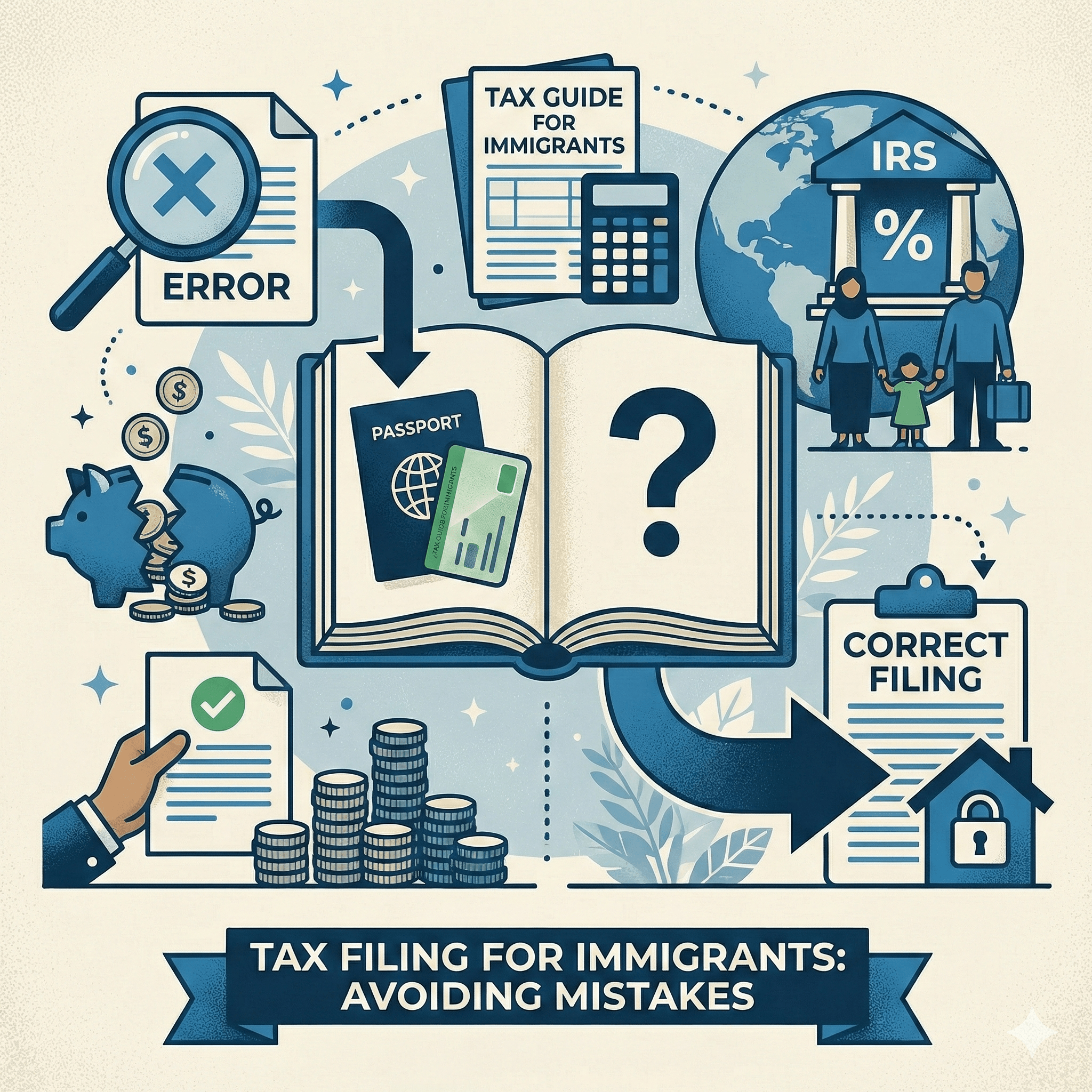
Tax Time Doesn't Have to Be Scary: Your Immigrant's Guide
⚠️ Disclaimer: This article is for educational and informational purposes only. It does not constitute tax, legal, or financial advice. Tax laws are complex and change frequently. Individual circumstances vary significantly. Always consult with a qualified tax professional, CPA, or Enrolled Agent before making tax decisions. The author and Duti.co are not responsible for any actions taken based on this information.
April 15th. For many immigrants, these three words trigger panic. The US tax system is confusing enough for native-born Americans – for immigrants navigating ITIN vs SSN, wondering about taxes on money sent home, or filing for the first time, it can feel overwhelming. This guide breaks down everything you need to know to file correctly and avoid expensive mistakes.
🎯 The Basics: Who Must File Taxes?
Filing Requirements by Income (2025)
Do You Need to File?
| Filing Status | Age | Minimum Income |
|---|---|---|
| Single | Under 65 | $14,600 |
| Single | 65 or older | $16,550 |
| Married Filing Jointly | Both under 65 | $29,200 |
| Married Filing Jointly | One 65+ | $30,750 |
| Head of Household | Under 65 | $21,900 |
🆔 ITIN vs SSN: What's the Difference?
Social Security Number (SSN)
- • US citizens
- • Permanent residents (green card)
- • Work-authorized immigrants
- ✓ File taxes
- ✓ Work legally
- ✓ Collect Social Security benefits
- ✓ Open bank accounts
- ✓ Apply for credit
Individual Taxpayer ID (ITIN)
- • Undocumented immigrants
- • Dependents/spouses without SSN
- • Anyone who needs to file taxes but can't get SSN
- ✓ File taxes ONLY
- ✗ Cannot work legally with ITIN
- ✗ No Social Security benefits
- ✓ Some banks accept it
- ✓ Some credit cards accept it
How to Get an ITIN
💰 Common Deductions Immigrants Miss
✅ You CAN Deduct These
- Child Tax Credit: Up to $2,000 per child under 17 (if they have SSN)
- Earned Income Tax Credit (EITC): $600-7,830 for low-income workers with kids (must have SSN)
- State & Local Taxes (SALT): Up to $10,000 deduction
- Home Office: If you work from home for yourself (not W-2 employees)
- Education Credits: American Opportunity ($2,500) or Lifetime Learning ($2,000)
- IRA Contributions: Reduce taxable income by $7,000
❌ You CANNOT Deduct These
- Money Sent to Family Abroad: Remittances are NOT tax deductible (it's a gift, not charity)
- Wedding/Funeral Expenses: Even if culturally expected, not deductible
- Personal Credit Card Interest: Only business interest deductible
- Commuting Costs: Driving to work is not deductible
- Gym Memberships: Even if "for health," not deductible
- Immigration Fees: Visa, green card fees NOT deductible
📊 Filing Status: Which One Are You?
Choosing the Right Filing Status
Single – Unmarried, divorced, or legally separated
Use if: You're not married as of Dec 31
Married Filing Jointly – Most married couples use this
Use if: Married as of Dec 31. Usually best option – combines income, higher deduction.
Important: Both spouses sign. Both responsible for accuracy.
Married Filing Separately – Rare, but sometimes needed
Use if: Spouse has tax issues, student loan income-based repayment, or trust issues.
Downside: Lose many credits and deductions.
Head of Household – Single parents with dependents
Requirements:
• Unmarried (or "considered unmarried")
• Paid more than half the cost of keeping up a home
• Qualifying child or dependent lived with you more than half the year
Best for: Single parents – better than "Single" status
🌍 Special Immigrant Tax Situations
If You Send Money Home
Why not? The IRS considers money sent to family as gifts. Gifts are not tax-deductible.
Exception (very rare): If your parent is a US citizen or resident AND you provide more than 50% of their support AND they earn less than $5,050/year AND they live with you (or would if not for health reasons), you MIGHT claim them as a dependent. This is extremely rare for parents living abroad.
- • Keep records of all transfers (for immigration purposes)
- • Don't try to deduct them
- • Focus on deductions you actually qualify for
If You Have Foreign Bank Accounts
⚠️ FBAR: Foreign Bank Account Reporting
- • Bank accounts in Nepal, Tibet, India, Bhutan
- • Investment accounts abroad
- • Accounts you have signature authority over (even if not yours)
- • Add ALL accounts together
- • File online at FinCEN.gov
- • Due: April 15 (auto-extension to Oct 15)
- • Separate from tax return
- • FREE to file
🆓 Free Tax Help for Immigrants
📋 VITA Program
- ✓ FREE tax prep
- ✓ For income under $67,000
- ✓ IRS-certified volunteers
- ✓ Find locations: IRS.gov/VITA
💻 IRS Free File
- ✓ Income under $84,000
- ✓ Guided step-by-step
- ✓ E-file included
- ✓ Visit: IRS.gov/FreeFile
🏛️ Community Clinics
- ✓ Many offer tax help
- ✓ Understand ITIN process
- ✓ Multilingual support
- ✓ Search "free tax help [your city]"
⚠️ Common Mistakes to Avoid
❌ Mistake #1: Not Filing Because You're Undocumented
❌ Mistake #2: Using Fake SSN
❌ Mistake #3: Claiming Fake Dependents
❌ Mistake #4: Not Reporting Cash Income
❌ Mistake #5: Ignoring FBAR Requirements
🎯 Your Tax Filing Checklist
Before You File (January-March)
☐ Gather documents: W-2 from employer, 1099 forms (gig work, interest), receipts for deductions
☐ Get ITIN if needed: Start process in January to have number by tax deadline
☐ Determine filing status: Single, Married Joint, Head of Household
☐ Calculate foreign accounts: Add all foreign bank balances – over $10k total?
☐ Find free help: VITA location, IRS Free File, or tax clinic
☐ File by April 15: Or request extension (gives you until October 15)
☐ Keep copies: Save tax returns for at least 3 years (7 years is safer)
💚 Final Thoughts
Taxes are intimidating, especially when navigating them in a second language with a different cultural background. But filing correctly protects you, builds your financial history, and gives you peace of mind.
Remember:
💙 You SHOULD file even if undocumented (use ITIN)
💙 Free help exists – VITA, Free File, community clinics
💙 Honesty is best – penalties for fraud are severe
💙 Keep good records – receipts, transfers, everything
💙 When in doubt, ask a pro – better safe than sorry
What tax questions do you have? Share in the comments – your question might help others too!
Related Reading
Explore more articles that complement this topic:
- IRS Gifting Tax Rules — Understand the tax implications of gifting money, especially in community savings.
- Building Credit in America — Tax compliance supports your credit-building journey.
- Health Insurance 101 for Immigrants — Health insurance costs may be tax-deductible — learn more.